Nutraceuticals are products derived from food sources that provide health benefits beyond basic Nutrition
Fungi such as mushrooms, are a rich source of various nutraceuticals, These include:
1. Polysaccharides
β-glucans: Found in the cell walls of fungi,
Chitin: Provides dietary fiber benefits.
2. Proteins and Amino Acids
Mushrooms contain a high-quality protein with all essential amino acids.
Specific proteins, like lectins.
3. Vitamins
Vitamin D: Especially ergocalciferol (D2), when exposed to sunlight or UV light.
B-complex vitamins: Such as riboflavin (B2), niacin (B3), pantothenic acid (B5), and biotin (B7).
4. Minerals
Potassium:
Selenium:
Copper, Zinc, Iron, Phosphorus:
5. Phenolic Compounds
gallic acid, catechins, and protocatechuic acid
6. Sterols and Triterpenoids
Ergosterol: A precursor to Vitamin D2.
Triterpenoids: Found in some fungi like Ganoderma (reishi),are of great interest (pubmed).
7. Lipids
Essential fatty acids, including linoleic acid,
8. Enzymes
Such as laccase and peroxidases,
9. Secondary Metabolites
Alkaloids:
Terpenes:
10. Dietary Fiber
Examples of Functional Fungi and Their Neutraceuticals:
Reishi (Ganoderma lucidum): Triterpenoids, polysaccharides, and sterols.
Shiitake (Lentinula edodes): Lentinan
Lion's Mane (Hericium erinaceus): Erinacines and hericenones
Cordyceps: Cordycepin
Please use pubmed to research

Cordyceps , renowned for its diverse bioactive compounds .
1. Cordycepin (3’-deoxyadenosine)
Description: A nucleoside analog unique to Cordyceps species, cordycepin is a standout bioactive compound.
Possible Health Benefits: refer pubmed
2. Polysaccharides
Description: Complex carbohydrates with potent biological activity.
Possible Health Benefits: refer pubmed
3. Adenosine
Description: A purine nucleoside with wide-ranging physiological effects.
Possible Health Benefits: refer pubmed
4. Ergosterol (Provitamin D2)
Description: A sterol compound that converts to vitamin D2 upon UV exposure.
Possible Health Benefits: refer pubmed
5. Beta-Glucans
Description: A type of polysaccharide known for immune-enhancing properties.
Possible Health Benefits: refer pubmed
6. Superoxide Dismutase (SOD)
Description: An enzyme with potent antioxidant activity.
Possible Health Benefits: refer pubmed
7. Vitamins and Minerals
Description: Contains essential micronutrients, including B-vitamins, zinc, selenium, and potassium.
possible Health Benefits: refer pubmed
8. Proteins and Peptides
Description: Small peptides and proteins with bioactive properties.
Possible Health Benefits: refer pubmed
9. Other Bioactive Compounds
Nucleosides:
Phenolic Compounds:
Flavonoids: .

Harmful Synthetic Food Additives in the UK , Our products contain none of the listed compounds
While the UK Food Standards Agency (FSA) and EU regulations deem most approved food additives safe at specified levels, emerging research highlights potential harms from many synthetic ones, especially with long-term or high exposure. These include links to hyperactivity, cancer, metabolic disorders, gut inflammation, and more.
Synthetic Colours (E100–E199)
These azo dyes and pigments are linked to behavioral issues, allergies, and potential carcinogenicity. UK labels warn they "may have an adverse effect on activity and attention in children"
E102: Tartrazine (yellow; in soft drinks, sweets, crisps). Side effects: Hyperactivity/ADHD in children, hives, asthma, potential neurotoxicity via gut metabolites.
E104: Quinoline Yellow (yellow; in sweets, drinks). Side effects: Hyperactivity, allergic reactions.
E110: Sunset Yellow FCF (orange; in sweets, drinks). Side effects: Hyperactivity, potential cancer in animal studies.
E122: Carmoisine (red; in sweets, jams). Side effects: Hyperactivity, behavioral disturbances.
E123: Amaranth (red; in sweets, drinks). Side effects: Potential carcinogenic effects.
E124: Ponceau 4R (red; in sweets, sauces). Side effects: Hyperactivity, allergies.
E127: Erythrosine (red; in cherries, sweets). Side effects: Thyroid disruption, potential cancer.
E129: Allura Red AC (red; in sweets, drinks). Side effects: Hyperactivity, immune dysregulation leading to colitis in animal models.
E131: Patent Blue V (blue; in sweets). Side effects: Allergic reactions, potential toxicity.
E132: Indigo Carmine (blue; in sweets, drinks). Side effects: Gut inflammation.
E133: Brilliant Blue FCF (blue; in sweets, ice cream). Side effects: Hyperactivity, cognitive/behavioral issues in children.
E142: Green S (green; in sweets, canned peas). Side effects: Allergic reactions.
E151: Brilliant Black BN (black; in sweets, sauces). Side effects: Potential gut disruption.
E155: Brown HT (brown; in chocolate). Side effects: Hyperactivity.
E171: Titanium Dioxide (white; in sweets, chewing gum—banned in EU but still used in UK in some products). Side effects: Inflammation, DNA damage, tumor promotion.
Synthetic Preservatives (E200–E299)
These can cause allergies, neurotoxicity, and cancer risks.
E210: Benzoic Acid (in soft drinks, sauces). Side effects: Asthma attacks, behavioral issues in children, neurotoxic metabolites.
E211: Sodium Benzoate (in soft drinks, jams). Side effects: Hyperactivity, allergies, potential DNA damage.
E212: Potassium Benzoate (in drinks, pickles). Side effects: Similar to above, gut disruption.
E213: Calcium Benzoate (in drinks, sauces). Side effects: Allergic reactions.
E214–E219: Parabens (e.g., E214 Ethyl p-Hydroxybenzoate; in beer, jams). Side effects: Endocrine disruption, potential cancer.
E220–E228: Sulphites (e.g., E220 Sulphur Dioxide; in dried fruits, wine, sausages). Side effects: Asthma, anaphylaxis, digestive issues, higher cancer incidence.
E249: Potassium Nitrite (in cured meats). Side effects: Prostate cancer risk, methemoglobinemia.
E250: Sodium Nitrite (in bacon, ham). Side effects: Colorectal/breast/prostate cancer, blood disorders.
E251: Sodium Nitrate (in cured meats). Side effects: Cancer risks (breast, overall).
E252: Potassium Nitrate (in cheese, meats). Side effects: Similar cancer associations.
E280–E283: Propionates (e.g., E281 Sodium Propionate; in baked goods). Side effects: Potential metabolic disruption.
E284: Boric Acid (in caviar). Side effects: Reproductive toxicity, growth retardation.
E285: Sodium Tetraborate (Borax; in caviar). Side effects: Similar to boric acid, potential carcinogenicity.
Synthetic Antioxidants (E300–E399)
These stabilize foods but may act as endocrine disruptors or carcinogens.
E310: Propyl Gallate (in oils, chewing gum). Side effects: Allergic reactions, potential hormone disruption.
E315: Erythorbic Acid (in meats, drinks). Side effects: Higher overall/breast cancer risk (as sodium erythorbate).
E316: Sodium Erythorbate (in meats). Side effects: Cancer associations.
E319: TBHQ (in crisps, oils). Side effects: Nausea, allergies, potential cytotoxicity.
E320: BHA (in cereals, crisps). Side effects: Possible carcinogen, endocrine effects.
E321: BHT (in cereals, chewing gum). Side effects: Possible carcinogen, liver/kidney damage in animals.
Synthetic Sweeteners (E900–E999)
Linked to metabolic issues, despite being calorie-free.
E950: Acesulfame K (in diet drinks, sweets). Side effects: Cancer risk, obesity, gut dysbiosis.
E951: Aspartame (in diet drinks, chewing gum). Side effects: Headaches, dizziness, potential cancer/cardiovascular disease.
E952: Cyclamates (in sweets, drinks). Side effects: Bladder cancer in animals, metabolic disruption.
E954: Saccharin (in diet drinks, sweets). Side effects: Cancer risk, depression.
E955: Sucralose (in drinks, baked goods). Side effects: Gut microbiome changes, weight gain, inflammation.
E961: Neotame (in drinks, sweets). Side effects: Similar to aspartame, potential neurotoxicity.
E969: Advantame (in drinks, sweets). Side effects: Limited data, but similar sweetener concerns.
Synthetic Emulsifiers, Stabilisers, Thickeners (E400–E499)
These alter gut health, potentially leading to chronic diseases.
E432–E436: Polysorbates (e.g., E433 Polysorbate 80; in ice cream, sauces). Side effects: Gut inflammation, obesity, microbiota disruption.
E450–E452: Phosphates (e.g., E450 Diphosphates; in processed meats, cheese). Side effects: Kidney damage, cardiovascular issues.
E461–E469: Cellulose Derivatives (e.g., E461 Methyl Cellulose; in ice cream). Side effects: Digestive upset, inflammation.
E471: Mono- and Diglycerides (in bread, ice cream). Side effects: Potential trans fat content, metabolic syndrome.
E472a–f: Esters of Fatty Acids (e.g., E472b; in baked goods). Side effects: Gut barrier disruption.
E481–E483: Stearoyl-2-Lactylates (e.g., E481; in bread). Side effects: Possible inflammation.
Synthetic Flavour Enhancers and Acidity Regulators (E600–E699)
E620–E625: Glutamates (e.g., E621 MSG; in crisps, soups). Side effects: Headaches, numbness, obesity, mortality risk.
E626–E635: Ribonucleotides (e.g., E635; in crisps). Side effects: Similar to glutamates, metabolic disruption.
E338–E343: Phosphates (e.g., E338 Phosphoric Acid; in cola). Side effects: Bone loss, kidney issues.
Other Harmful Synthetics
E551: Silicon Dioxide (anti-caking; in salt). Side effects: Potential nanoparticle risks, inflammation.
E900: Dimethylpolysiloxane (anti-foaming; in fried foods). Side effects: Digestive issues in high amounts
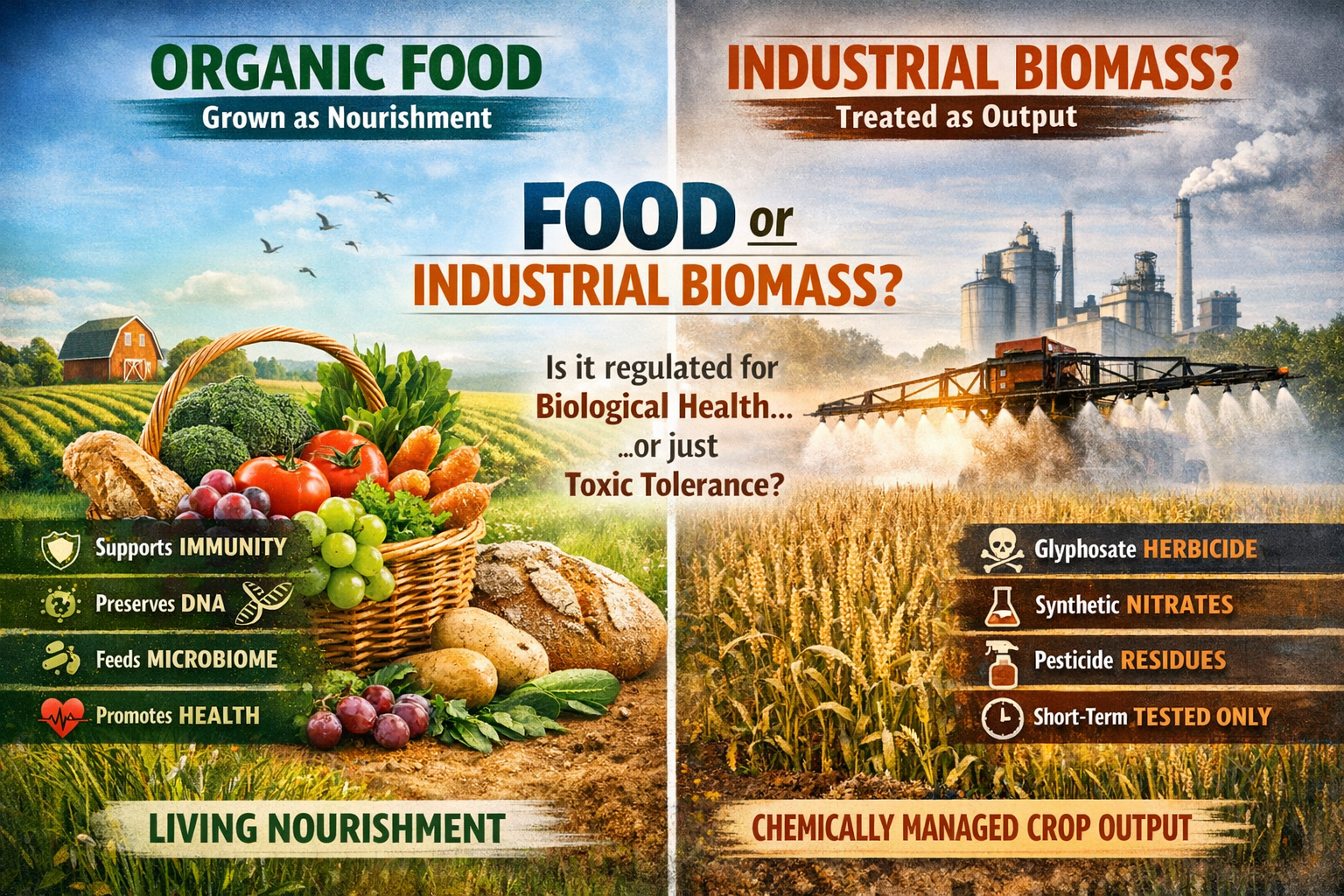
Add in a cocktail of herbicides fungicides and pesticides
Should any be present in our diet
complain to your local council,FSA and MP this is not food (industrial biomass)